Typical scenarios and decision focus
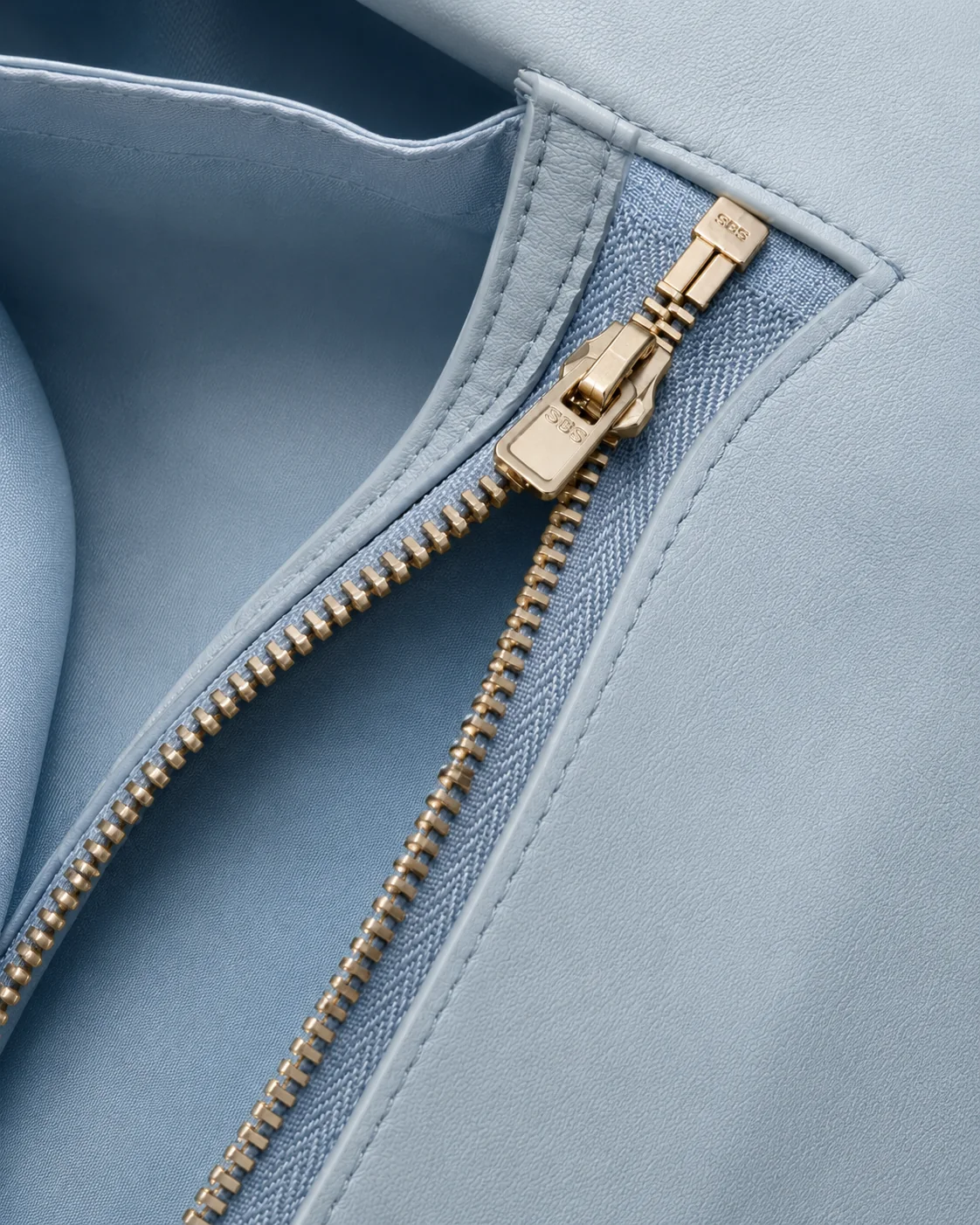
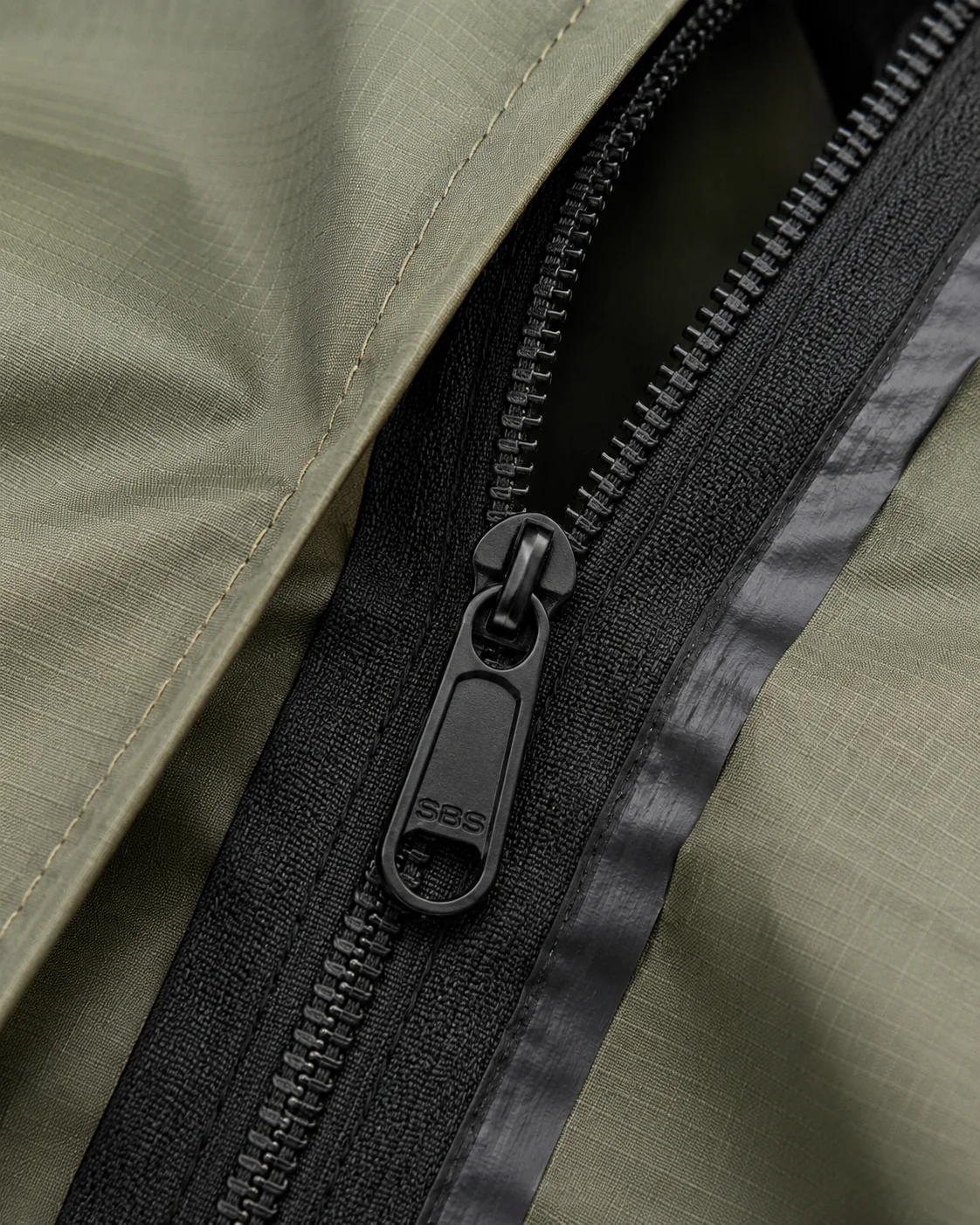
Jacket fronts
Review open-end components, length, placket thickness, one- or two-way operation and puller grip.
Dresses and formalwear
Review concealment, fabric stability, seam allowance and exposed puller.
Trousers and denim
Review closed-end construction, metal finish, length and laundering environment.
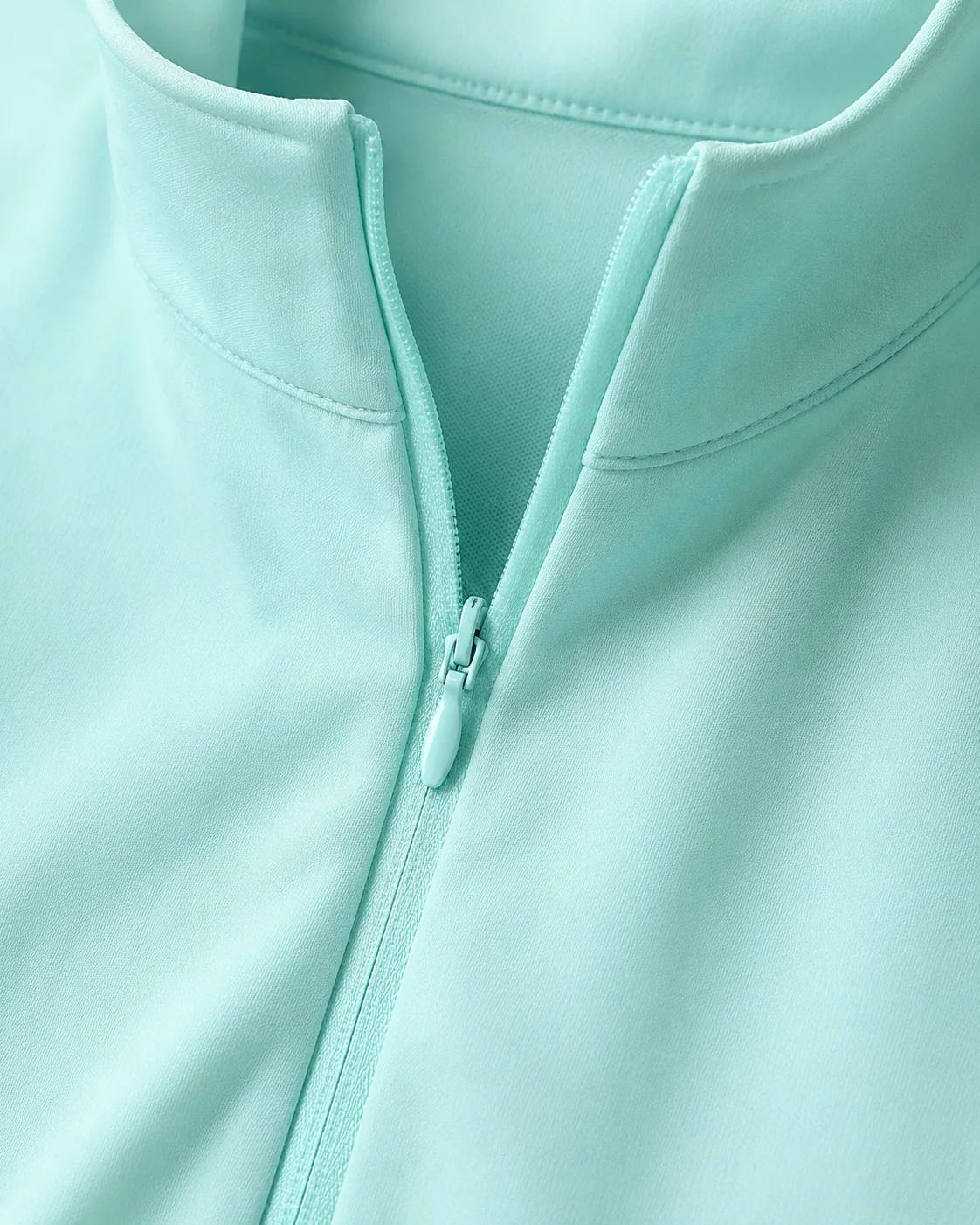
Sports and casualwear
Review flexibility, weight, reverse appearance and frequent operation.
Project confirmation points
- Garment type and opening position
- Production fabric, lining and seam construction
- Gauge, end type, slider count and orientation
- Color, slider, puller and hardware language
- Body movement, laundering and durability
Product families to evaluate
Material selection follows end-use risk. These families are candidate starting points, not unverified suitability claims.
Nylon zippers
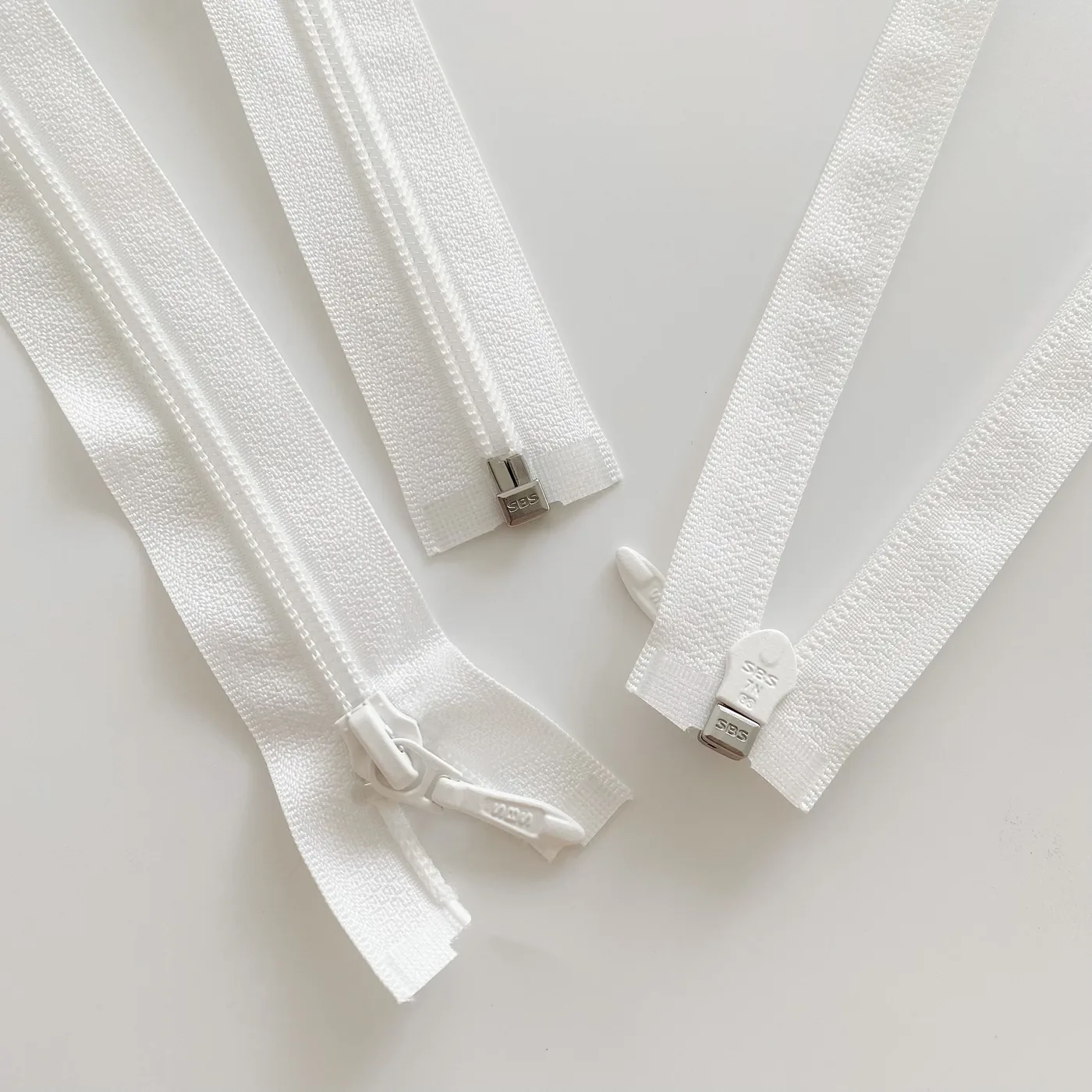
Nylon zippers are a practical starting point for projects that need a flexible opening, relatively light construction or curved-path adaptability. No. 5 open-end configurations are often discussed for jackets, while larger gauges, closed-end and two-way configurations can extend to bags and equipment. Final suitability must be verified in the finished product.
View details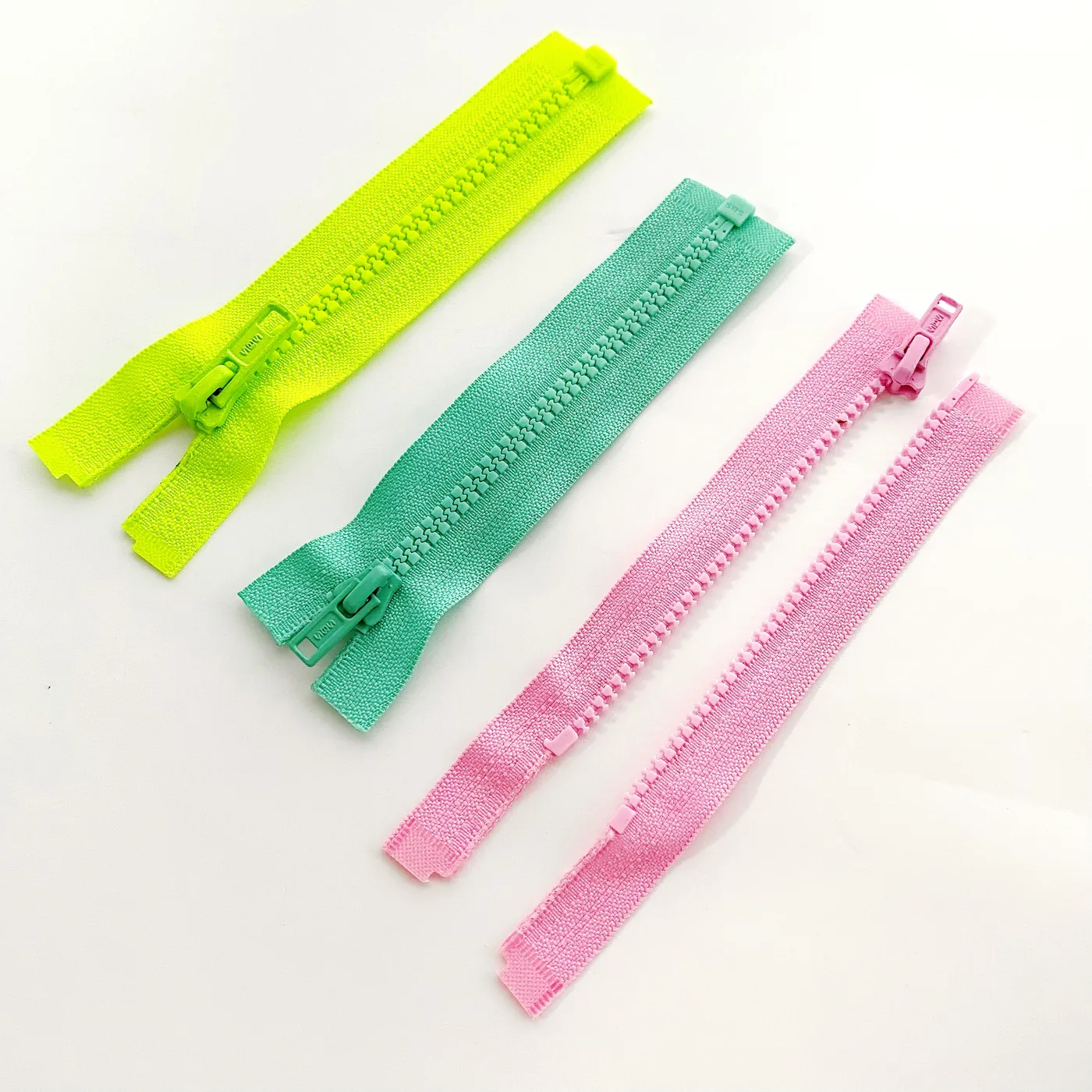
Resin zippers
Resin zippers suit products where the teeth are intended to become a visible design element or where strong color expression and a defined structural line are desired. Smaller open-end directions can support childrenswear and lightweight jackets; larger open- or closed-end directions can be evaluated for bags, heavier jackets and equipment.
View details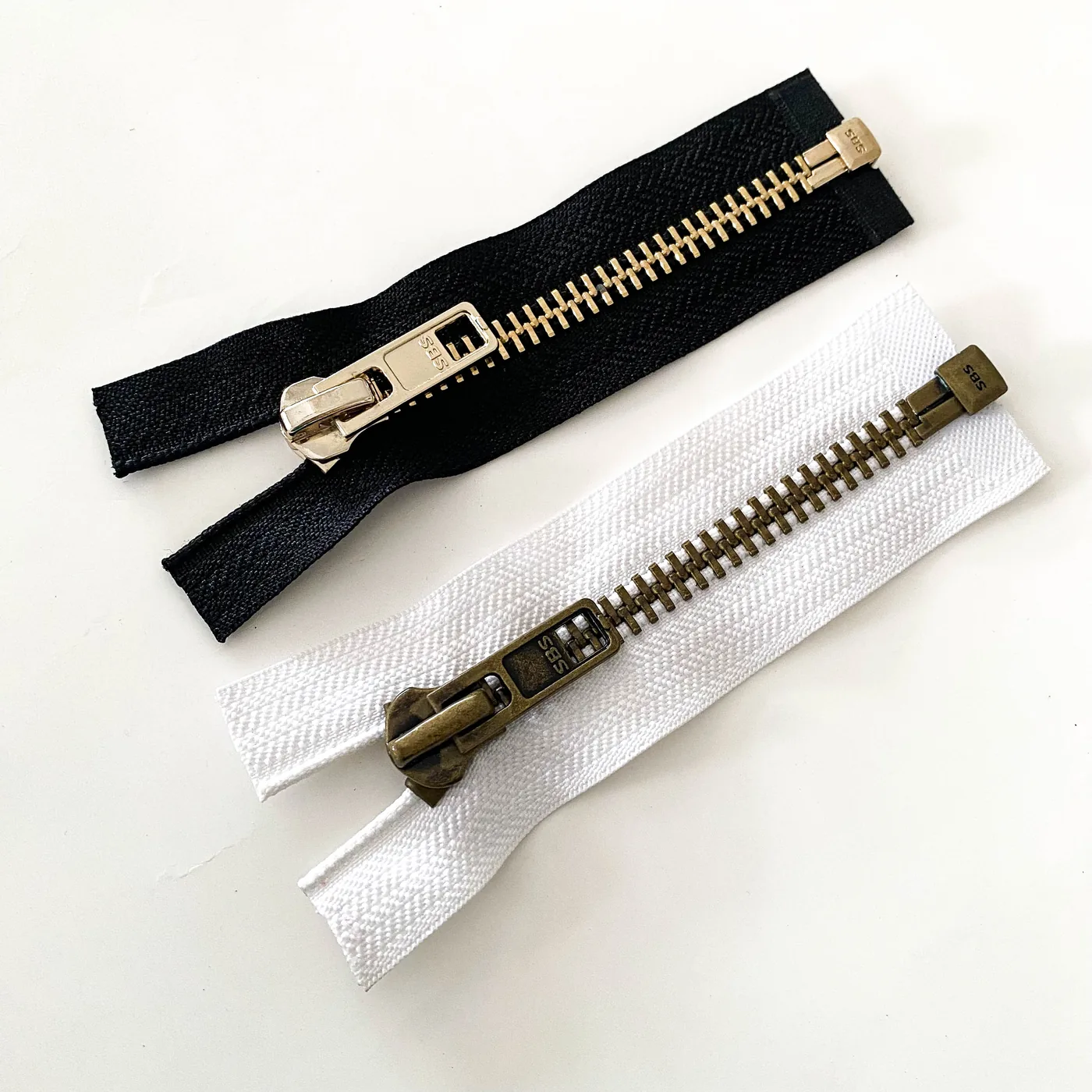
Metal zippers
Metal zippers suit products that emphasize authentic material character, vintage styling or refined hardware details. No. 3 trouser zippers support compact constructions, while larger open-end directions such as No. 8 create a stronger visual and structural presence. Finish durability must be verified for the actual environment.
View detailsFrequently asked questions
Should apparel selection start with material or gauge?
Start with garment type, opening and appearance, then determine material and gauge together.
Can on-screen color be used to match fabric?
No. Approve against a physical card or sample next to the target fabric.
What should be checked in a garment sample?
At minimum check length, puckering, snagging, running behavior, placket flatness and body movement.
Dongguan Guanxun Zipper Co., Ltd. is an authorized SBS Zipper dealer, not the SBS brand owner or the listed manufacturing company. Product specifications, performance, price, MOQ and lead time require written project confirmation.